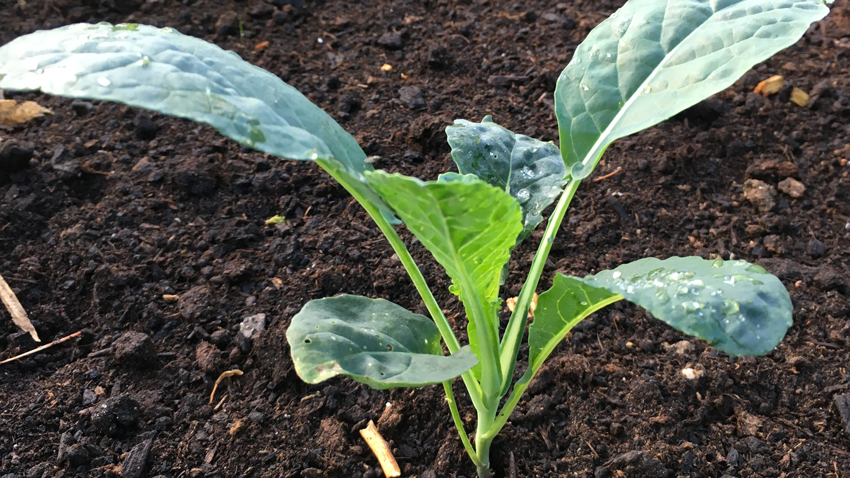
Choose a sunny site with deep, firm & moisture-retentive soil
Raised beds are perfect. If growing in pots, plant one to a large, deep pot (eg 30x30cm)
Plant Red Russian Kale and Cavolo Nero 30cm apart and firm in well. Curly Kale can be planted 20cm apart.
Place a brassica collar around base of stem to prevent cabbage root fly (you can do this by cutting a 10cm disc from cardboard, then cut into the centre)
Net against pigeons and cabbage white butterflies – you could make a hoop tunnel approx. 1.5m high, and cover with insect proof mesh/net.
Growing Tips:
During dry spells, water well once or twice a week. Other than that, leave them to their own devices and they should be fine.
May need earthing up and/or staking in strong wind if they get too tall (approx. 1.5m high)
Remove yellow leaves as they appear - this will help to keep the plants healthy. Leaving the yellow leaves on the soil will encourage slugs, so is best to avoid this!
Problems & Pests:
Cabbage root fly – stunted growth/sudden wilting – the maggots tunnel into the roots to feed and the roots start to rot. Brassica collars and fine mesh netting will help to prevent this in future.
Eaten by caterpillars – use netting to avoid Cabbage White butterfly from laying eggs in the first place. Check foliage (underside and near stems) regularly for small white/green/yellow eggs and wipe off. Pick off caterpillars if you find them.
Club root – stunted growth/discoloured leaves – this is a fungal disease that can’t be remedied so you will need to get rid of affected plants. Plant future brassicas in a different area of the plot to avoid re-infection in subsequent years.
Slugs/Snails/Pigeons – these will all eat leaves. Netting is best for keeping pigeons away, and slug traps for slugs/snails
Harvesting/Storing:
Harvest when the kale leaves reaches a sensible size. This will be fairly swiftly in the spring/summer months (within a few weeks of planting) and in very early spring for autumn planted kale.
Kale will keep in the fridge in a bag or airtight container for a few days. Alternatively, pop some in a jug of water and they will keep for a few days like this, whilst making your kitchen look pretty!
Mature kale will start producing broccoli like florets - these can be cooked and eaten if picked before they flower.