
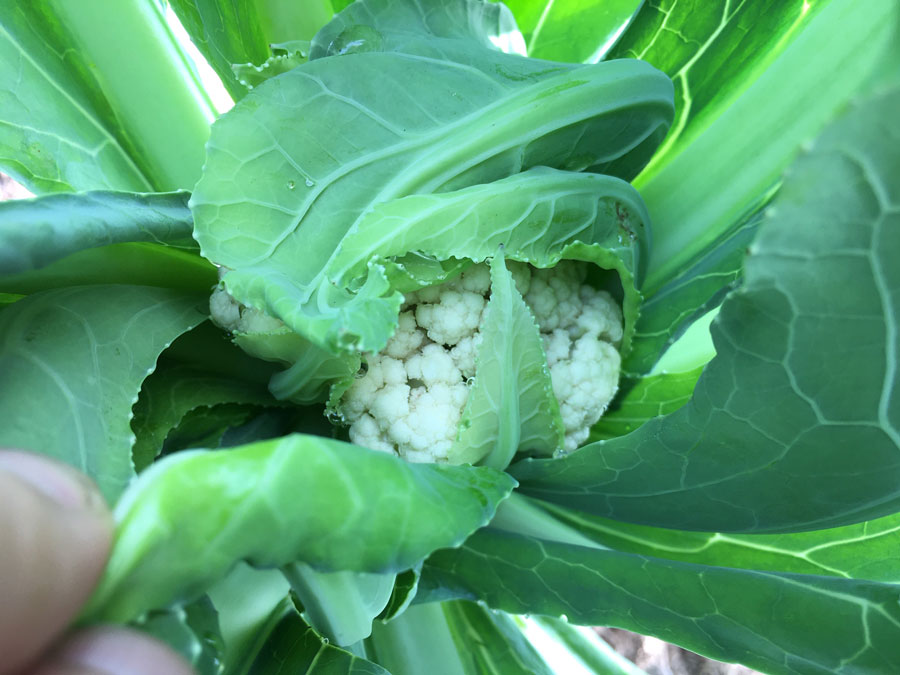
This advice is for both cauliflower and romanesco cauliflower.
Planting Cauliflower
- Choose a sunny site with deep, firm & moisture-retentive soil
- Raised beds are perfect. If growing in pots, plant one to a large, deep pot (eg 40x40cm)
- Plant 40cm apart and firm in well by treading down the soil around the base - this will encourage the plant to produce a tight cauliflower head.
- Protect from pigeons, caterpillars and cabbage root fly by covering with horticultural fleece or mesh netting and apply a brassica collar around the base of each seedling when you plant them (you can do this by cutting a 10cm disc from cardboard, then cut into the centre. Place this around the stem at the base of the plant)
Growing Tips:
- During dry spells, water well once or twice a week.
- Check leaves and stems regularly for caterpillars and eggs from May to October when cabbage white butterflies are active.
- Cauliflower will start off as a slightly leggy, taller looking plant than you'd expect. As long as it is well firmed in, and kept reasonably cool in moist soil, it should start to take on a different shape after a couple of months. Once the plant is fairly mature, approx 30-40cm tall, it should start to produce the cauliflower itself.
- When the cauliflower head starts to form, pull one or two of the leaves over the top of the cauliflower itself to cover it from sun/cold weather. This will help it to maintain its creamy colour. You can use twine to tie the leaves around it if they won't stay put!
Problems & Pests:
- Cabbage root fly – stunted growth/sudden wilting – the maggots tunnel into the roots to feed and the roots start to rot. Brassica collars and fine mesh netting will help to prevent this in future.
- Eaten by caterpillars – use netting to avoid Cabbage White butterfly from laying eggs in the first place. Check foliage (underside and near stems) regularly for small white/green/yellow eggs and wipe off. Pick off caterpillars if you find them.
- Club root – stunted growth/discoloured leaves – this is a fungal disease that can’t be remedied so you will need to get rid of affected plants. Plant future brassicas in a different area of the plot to avoid re-infection in subsequent years.
- Slugs/Snails/Pigeons – these will all eat leaves. Netting is best for keeping pigeons away from your cauliflower plants, and slug traps for slugs/snails
- Cauliflower head not forming properly - if it's very small, or growing loosely, or not forming at all, the problem is more than likely to do with weather conditions (too hot/dry) or soil conditions (too dry/not firmed in well)
Harvesting/Storing:
- If you plant in spring/early summer, you should be able to harvest from late summer to autumn, when the cauliflower head reaches a good size, and before it starts to open out.
- If you plant in late summer, harvest in late autumn before the first frosts.
- Cauliflower will keep in the fridge for a few days