Choose a sunny site with fertile, moisture-retentive soil
If you receive your plants early in the season, while nights are still cold or there is a risk of frost, it is best to temporarily plant in the punnets that they arrive in, or in small pots, and keep them on a sunny windowsill or in a greenhouse until the weather warms up a little.
Plant 80cm apart in raised beds/traditional veg patch, or 1 plant to a large, deep pot/planter that allows plenty of space for the roots (approx 30cm x 30cm - straight edged pots are better than narrow at the bottom)
Climbing/trailing varieties can be grown up a trellis or fence to save space (eg Tromboncino and to a lesser extent Tondo Chiara di Nizza.) Bush varieties will not climb and will form tighter bush like plants (eg Custard White, Green Bush, Yellow Atena)
Growing Tips:
Keep it well watered during the summer - try to avoid the soil getting too dry in between waterings.
Don't plant out until risk of frost has passed. Make sure plants are sheltered from strong cold winds in spring - you could cover plants with a cloche in the early days until the weather warms up and settles.
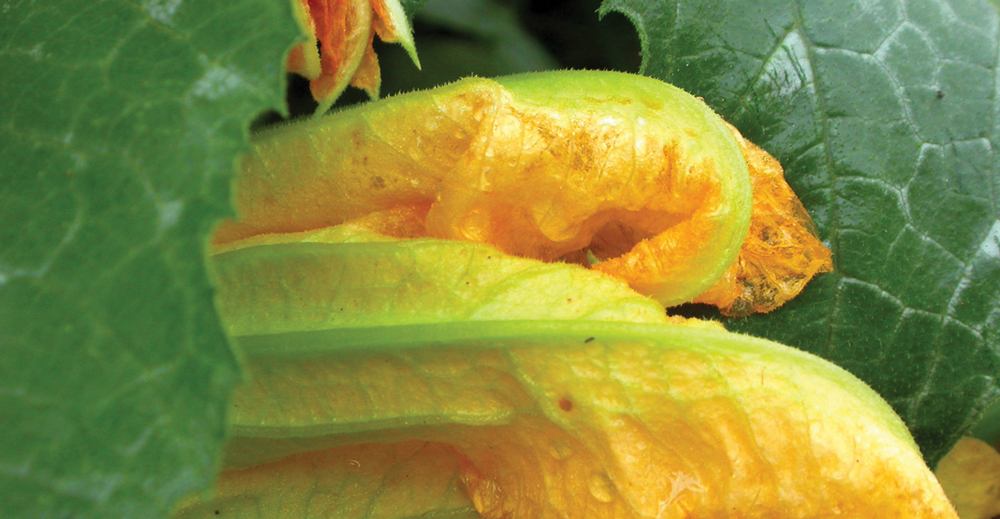
The male flowers will come through first. The female flowers which bear fruit will come in a bit later with warmer weather.
Plants will benefit from a fortnightly or monthly liquid feed once fruits start to form, especially if grown in pots.
Prune out any leaves that are affected with mildew (see below)
Problems & Pests:
Powdery Mildew - squashes are often affected by mildew, particularly towards the end of the season as the weather turns cooler and damper. Cut off the worst affected leaves to allow the new healthy leaves to come through and you should be able to keep the plant reasonably healthy until late summer.
Fruits rotting at one end - this is likely to be Blossom End Rot, which can be remedied by ensuring the plant has enough water which will allow it to absorb the right nutrients from the soil
No female flowers/fruits appearing - this is usually due to cool weather or lack of sunshine (or other conditions like drought or strong winds.) Early in the season, immature plants will produce male flowers, and female flowers arrive a little later with warmer temperatures. By late June/early July you should start to see female flowers if conditions are good.
Mice/Rats/Voles - if you see any teeth marks in the fruits, this is likely to be a rodent of some description..!
Harvesting/Storing:
Cut off fruits with a sharp knife once they reach the desired size. As a general rule, younger fruit will be tastier than older, larger fruit!
You should get a fairly continuous crop for several weeks, often through to early autumn.
Courgette will keep for several days in the fridge or in a cool room at room temperature.
You can make great pickles from courgettes, and this is a good way to store them for longer. Also, try making soups and pasta sauces and freezing if you have a real glut on your hands. Or force feed neighbours and friends!!